
Project Highlights
- Hexavalent chromium (co-treated with TCE) to below detection limits within 1 year
- Regulatory closure achieved within 3 years of bioaugmentation
Summary
- Client: COWI A/S
- Site Location: Svendborg, Denmark
- Projet Duration: 2004-2007
- Services Provided:
- Gene-Trac® Dehalococcoides Testing
- KB-1® Bioaugmentation
Problem Definition
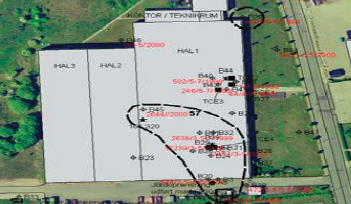
In 2004, the site was an active manufacturing facility with groundwater plume trichloroethene (TCE) concentrations ranging from 1 to 20 milligrams per liter (mg/L), and hexavalent chromium (Cr
Solution
EISB for treatment of the TCE and Cr(VI)-impacted groundwater was implemented via a forced-gradient flow field to distribute lactate (electron donor) throughout the plume. After a two month conditioning period, strongly reducing conditions were established and 12 wells located throughout the plume were bioaugmented with approximately 3 liters each of the KB-1® culture to introduce Dehalococcoides (Dhc) bacteria.
Notable Results
Within five months of KB-1® bioaugmentation, significant enhanced reductive dechlorination was evident, resulting in accumulation of the non-toxic dechlorination product ethene. Gene-Trac® Dhc testing indicated high concentrations (107 Dhc per liter of groundwater) post bioaugmentation. Within one year, Cr(VI) was reduced to concentrations below detection limits. Within three years, TCE, and vinyl chloride concentrations in groundwater were reduced to levels below risk based cleanup criteria across the site and the Danish regulatory authority approved a no further remedial action designation for the site.
